

Reference project smoke trolley washer
Smoke trolley washing system in the meat industry
Hochreiter Fleischwaren in Bad Leonfelden (Austria) is a family business with many years of experience in the production of ready-made meat and sausage products. We were already familiar with the site and the processes there, so we were able to tackle the reference project in spring 2024 all the more concretely: the design, delivery and installation of a smoke trolley washing system as a cabin washing system (KWA-UDT). The aim was to find a solution that meets the hygiene requirements of meat processing and fits neatly into the structural conditions on site.
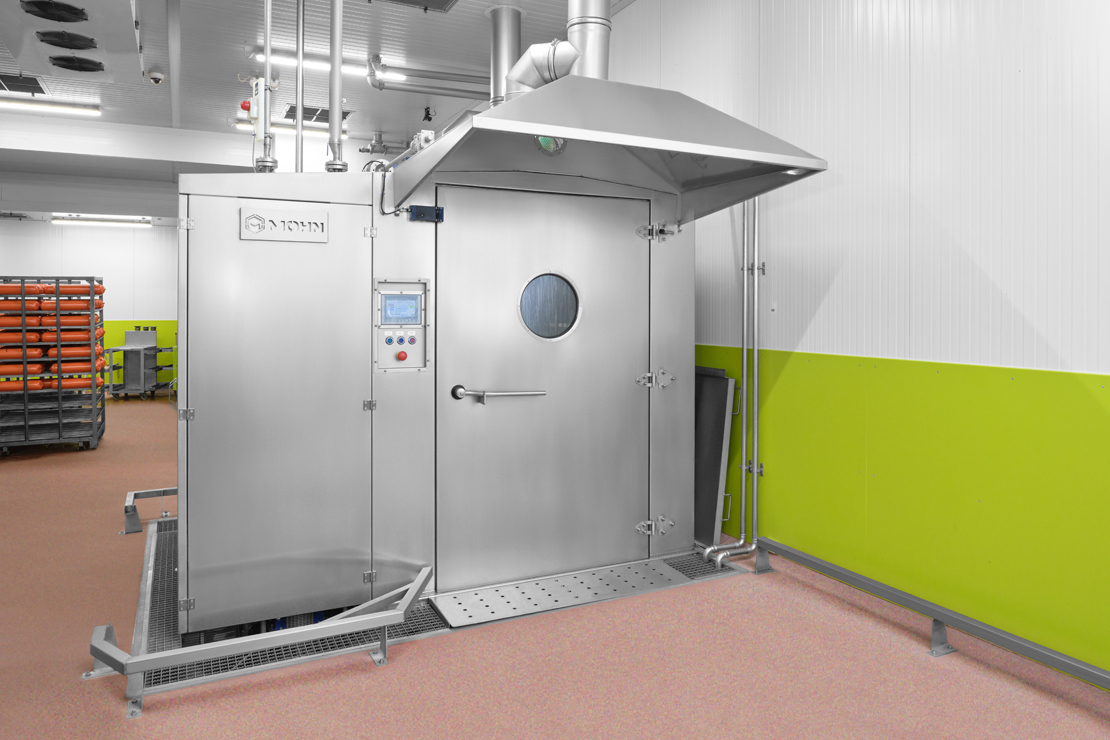
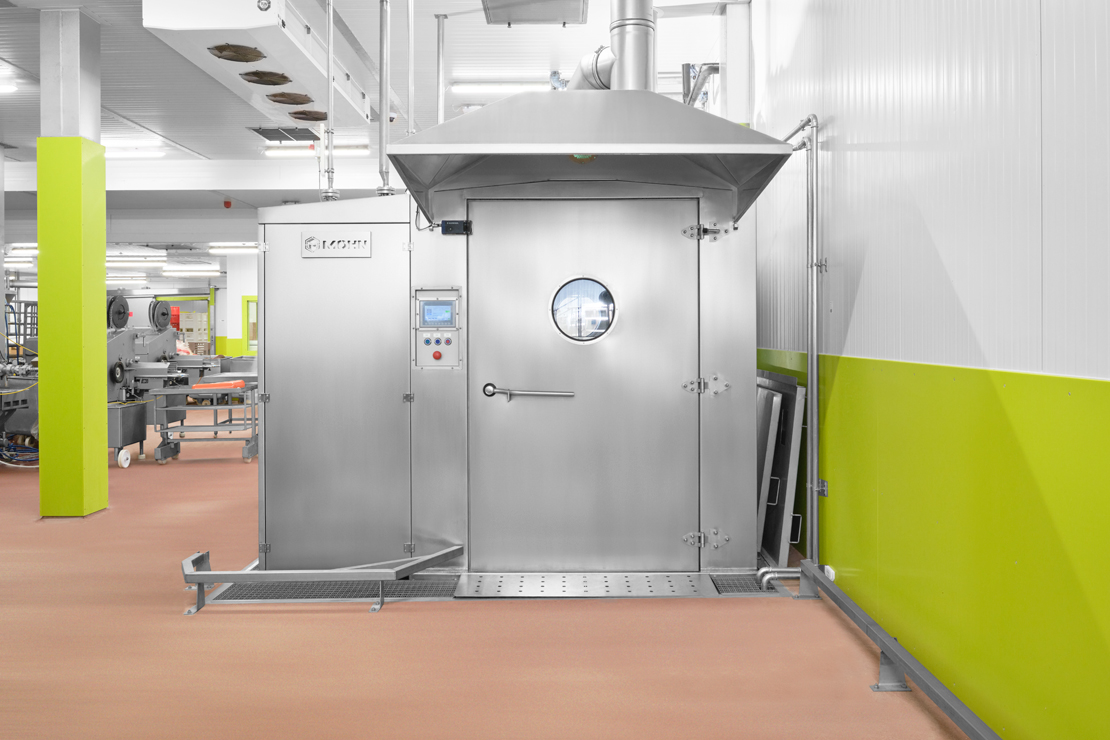
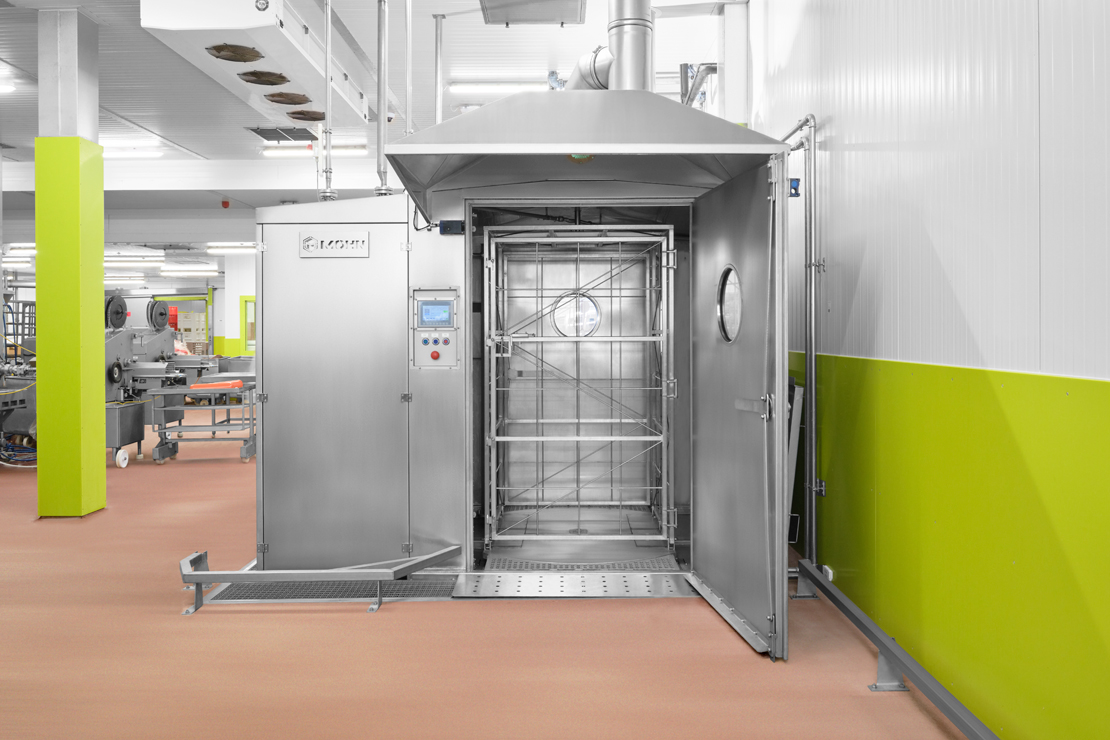
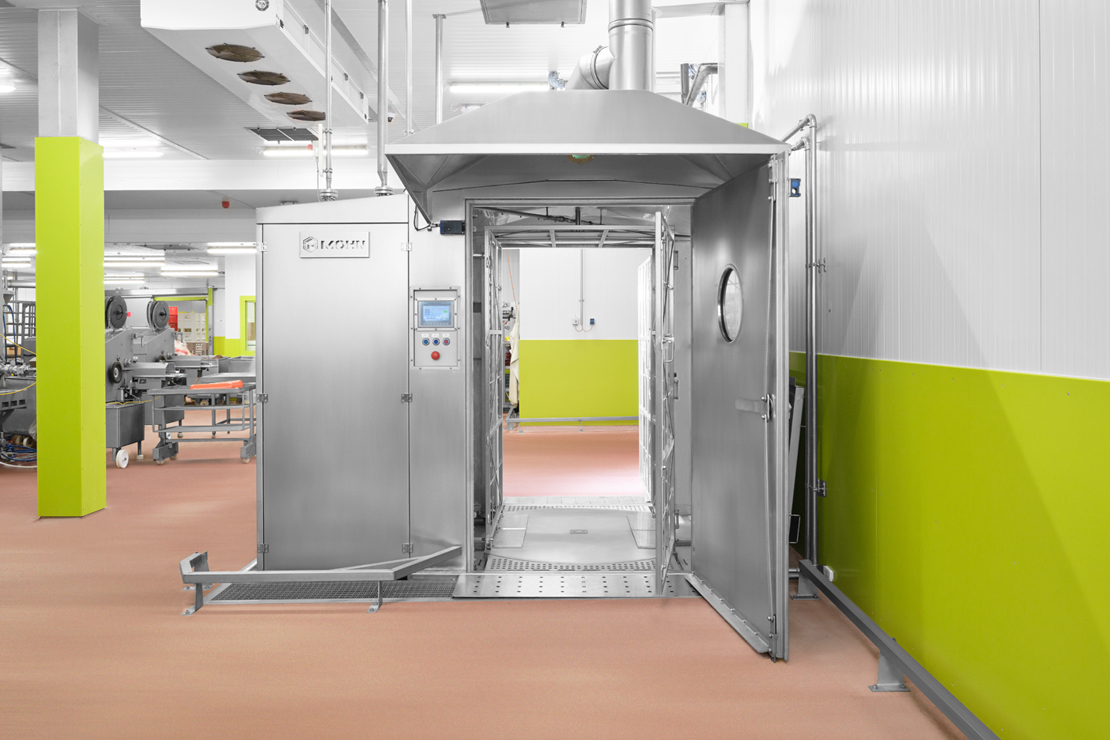
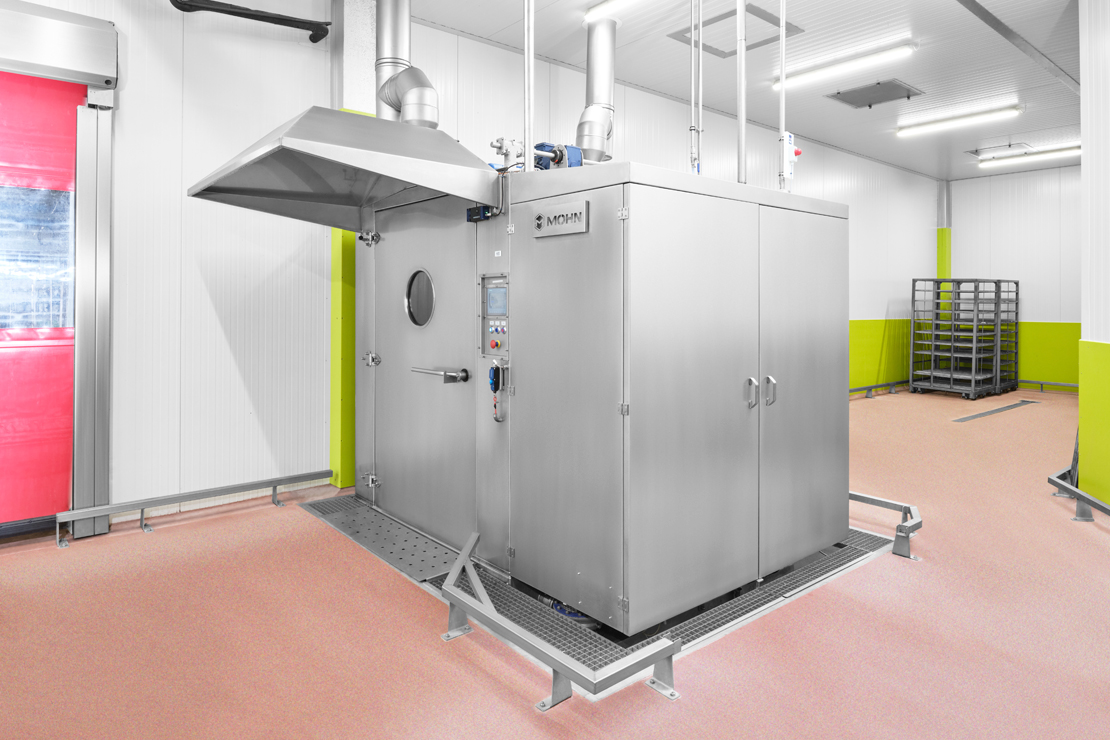
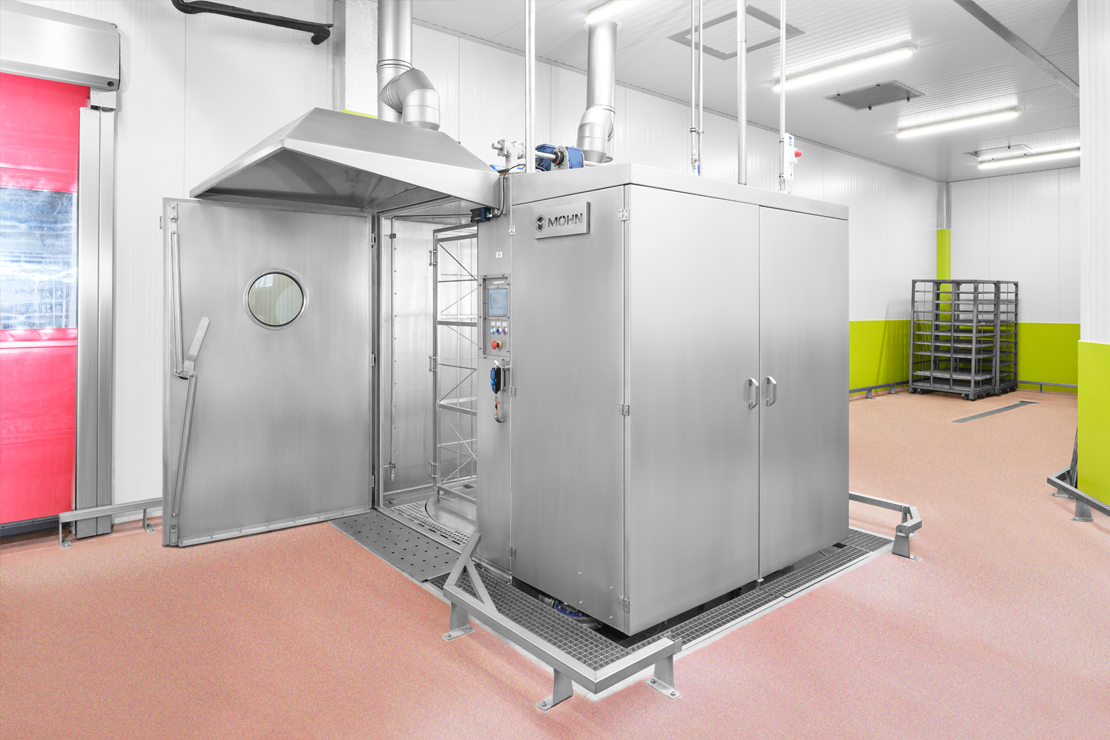
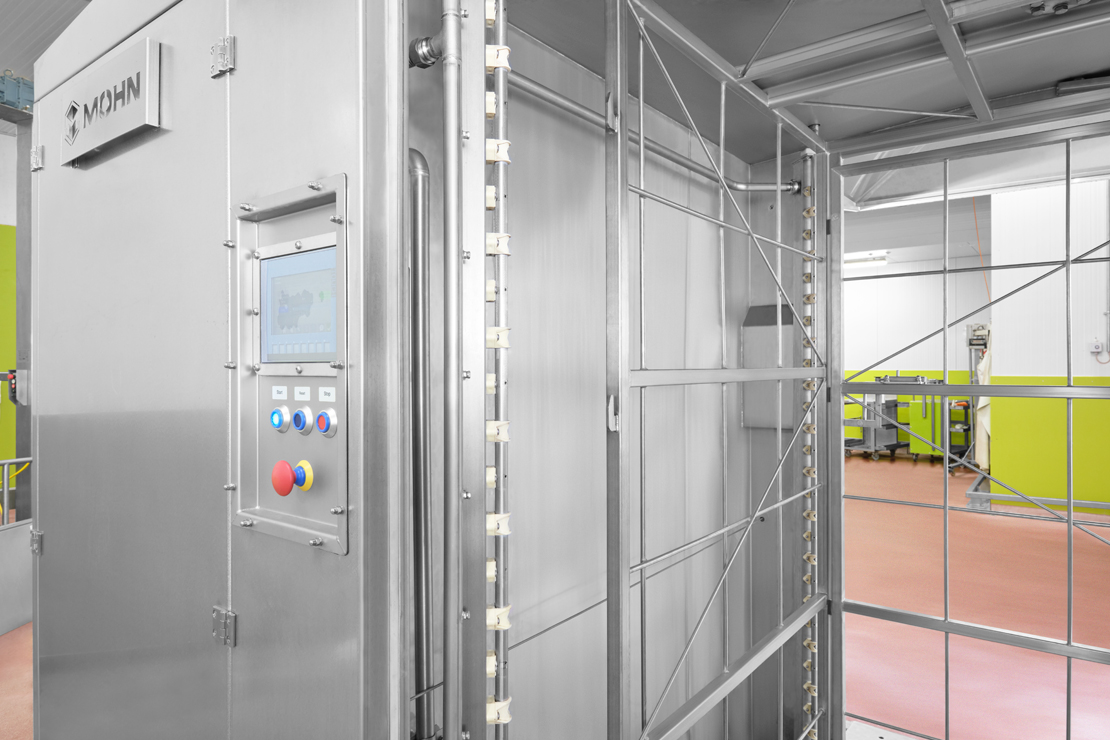
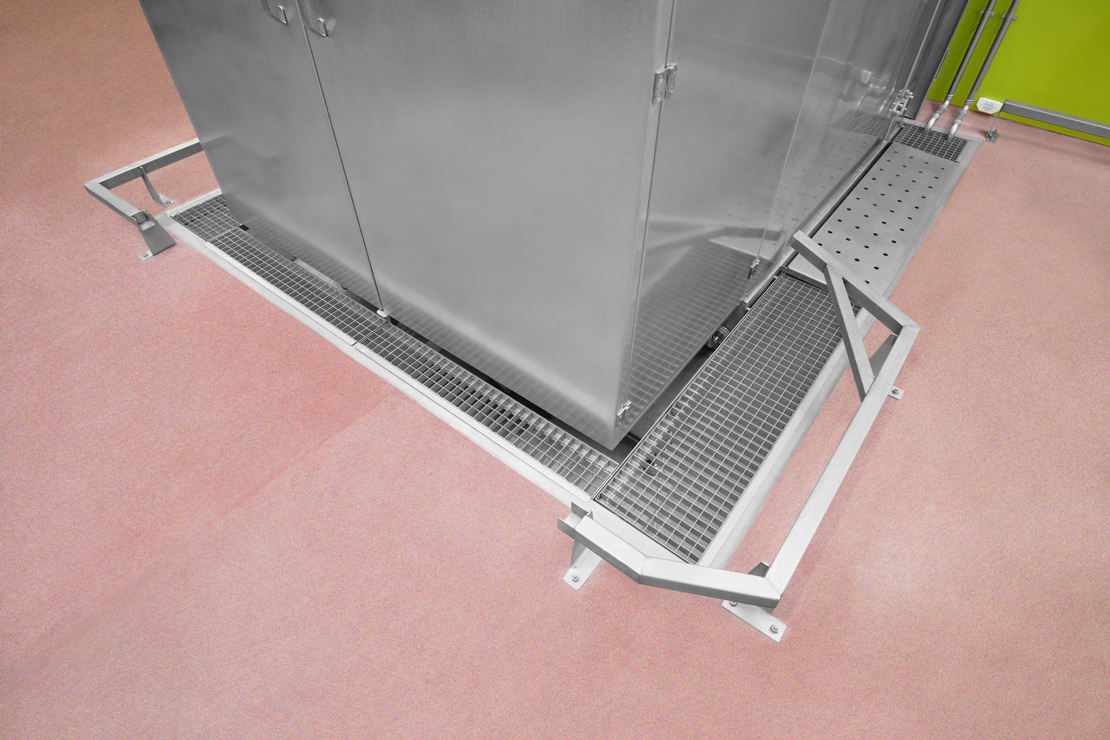
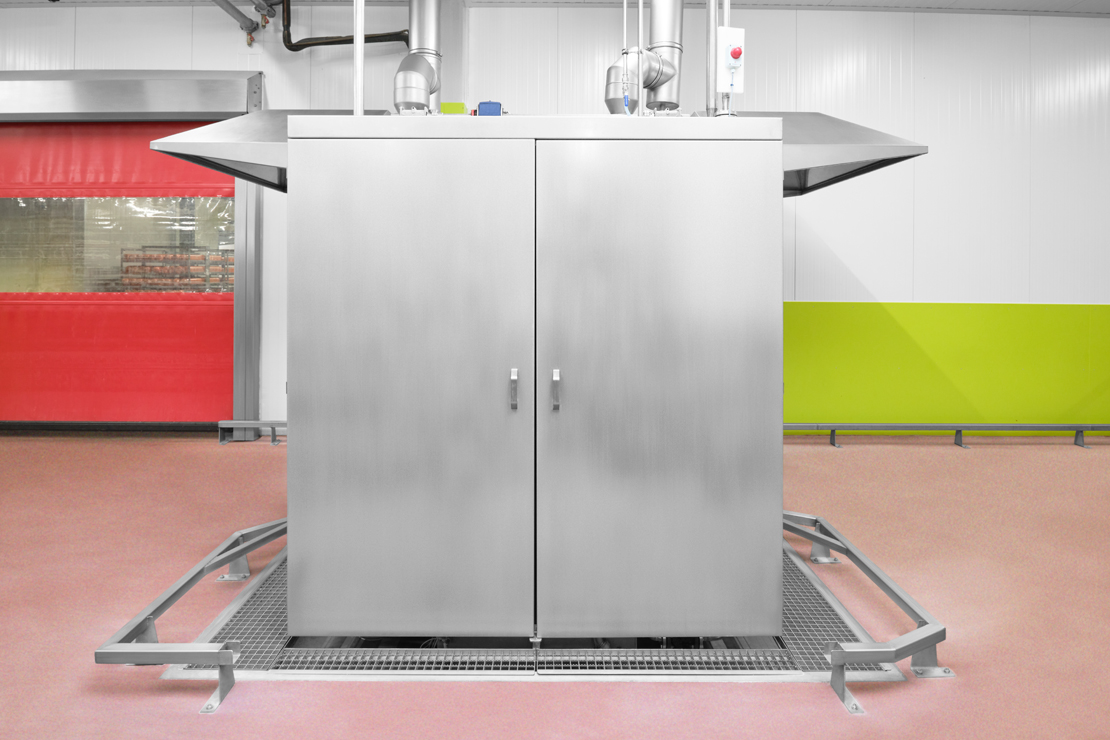
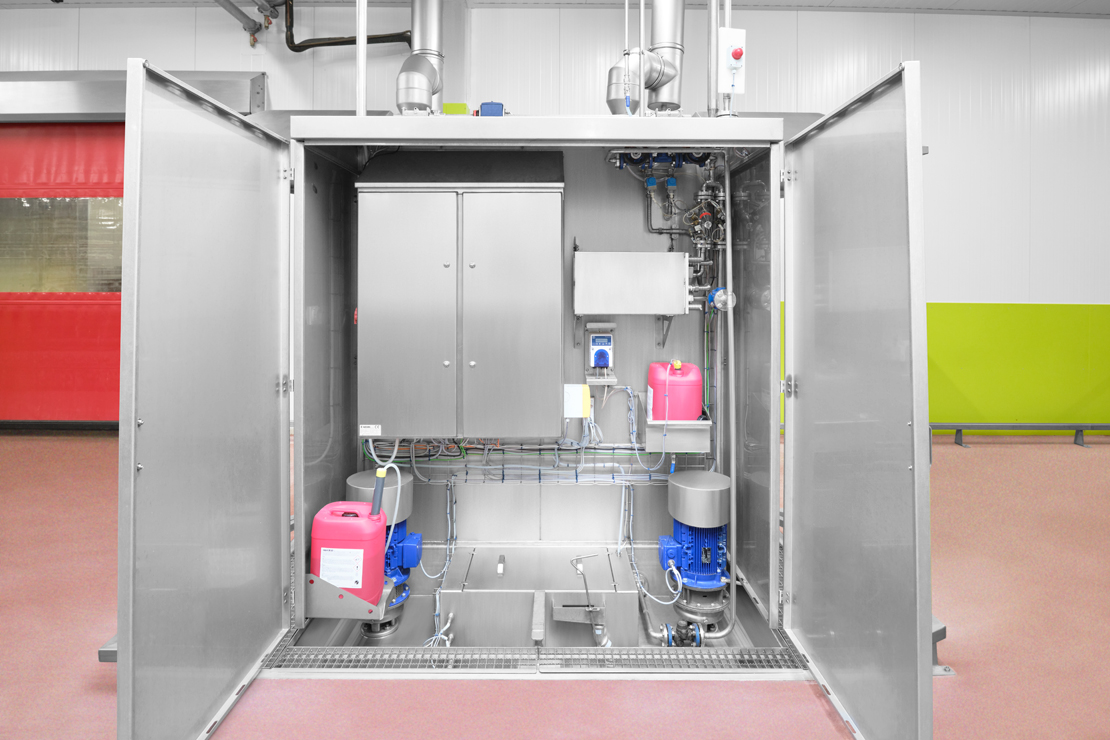
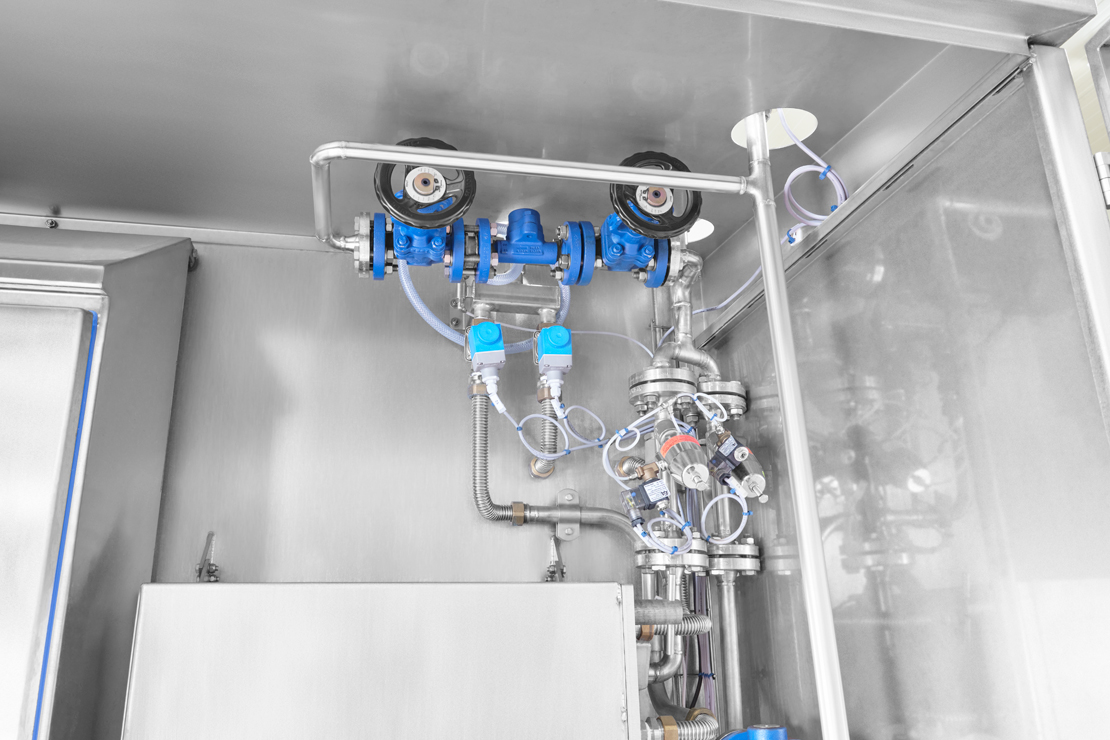
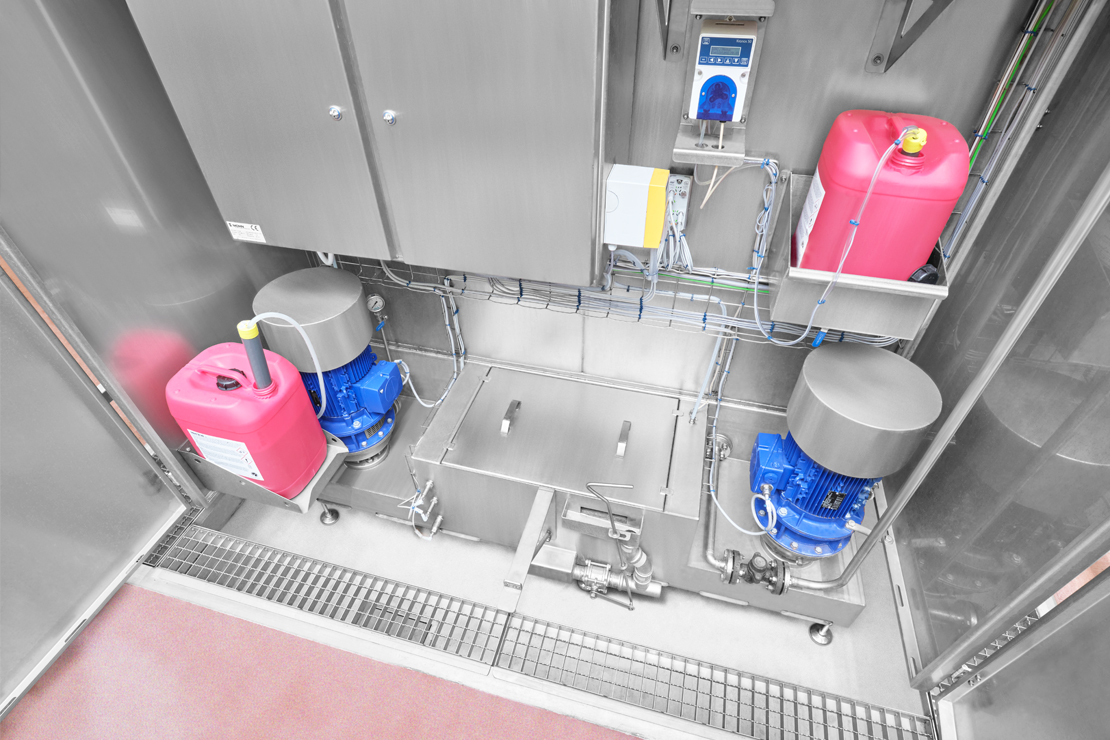
Selchwagen-Waschanlage - Rauchwagen reinigen ohne Umwege: Lösung für stark verschmutzte Rauchwagen, ID 23-63521 - Bilder zum Vergrößern bitte anklicken
Customer requirements and tasks
The focus was on heavily soiled smoke trolleys - with typical residues such as protein residues and meat adhering to grids and smoke spits. This resulted in clear tasks for us:
- The cleaning process had to be reproducible, even if the soiling fluctuated on a daily basis.
- Spray shadows had to be avoided as far as possible so that all areas of the trolleys were covered.
- The system had to be able to be reliably integrated into the shift operation - without additional rework loops.
- At the same time, we had to take the structural situation into account, including the required floor pit (500 mm) and the on-site DN100 floor drain.
- We also wanted a hygienic design in 1.4301 stainless steel and equipment that took the system's environment (vapours/humidity) into account.
Project description and special features
To meet these requirements, we have realised a cabin washing system type KWA-UDT made almost entirely of stainless steel 1.4301. The machine housing is double-walled, sound and heat insulated, manufactured in one piece and completely welded.
For the washing principle in this project, we rely on a combination of a rotating washing platform and counter-rotating crossflow spraying. This means that the items to be washed are moved during cleaning and simultaneously sprayed from opposite directions - an approach that reduces spray shadows and makes wetting more even. The nozzle pipes through which the water flows are set in rotation by drives on the machine roof. According to the specification, there are no moving parts or hose connections in the system itself. The process ends with a fresh water rinse.
Two stainless steel centrifugal pumps (EDUR) are provided for circulation, each 7.5 kW, with 1000 l/min at 5 bar. The tank filling is approx. 900 litres (once at the start of the shift), the fresh water consumption per batch is specified as 10-30 litres (adjustable). An hourly output of approx. 20 smoke trolleys is given as a guide - depending on the degree of soiling. The usable area/interior dimensions are designed for smoke trolleys (e.g. 1060 × 1315 mm, entry height up to 2050 mm).
Integration into the infrastructure was also part of our planning. A floor pit with a depth of 500 mm, including a DN100 floor drain provided by the customer, was required for the installation. On the media side, fresh water (3/4", 3-6 bar, min. 45 °C), electricity (400 V, 50 Hz, 17 kW), waste water (DN50), exhaust air (DN250, 1500 m³/h, time-controlled) and steam (2-6 bar with condensate return) are provided.
Equipment that makes the difference in everyday life
To ensure that the system runs stably over the long term in a hygienically sensitive environment, we have implemented several features at the site that are noticeable in day-to-day operation.
We implemented the electrical part using a Rittal HD enclosure made of stainless steel 1.4301 in hygienic design with IP69. In cleaning areas, this is not a "nice-to-have", but a question of suitability for everyday use: moisture, splash water and cleaning chemicals are all part of the equation.
The robust, sealed design - including stainless steel cable glands - supports an installation that is designed for such conditions.
When it comes to room climate and visibility, we have integrated a fume extraction system made of 1.4301 stainless steel. Extraction bonnets at both ends and two stainless steel radial fans (Karl Klein) are used to remove the vapours in a time-controlled manner via the washing programme(1500 m³/h at 500 Pa, DN250 connection for on-site piping). This reduces the moisture and condensate load around the system - and makes the area around the cabin easier to control, especially during loading and unloading.
For the process heat, we have implemented the system with indirect tank heating via steam using the heat exchanger principle - including END stainless steel angle seat valve, Spirax-Sarco condensate drain and condensate return. The advantage lies in the stable heat supply: If the temperature and process conditions remain constant, washing programmes can be run reproducibly - an important point for heavily soiled wash items.
The system is controlled via Siemens S7-1200 with HMI display. In terms of operation, this means that programmes, statuses and settings are visible directly on the machine. This helps in shift operation because processes remain traceable and parameters can be set accurately.
We have also integrated a detergent pump (0.2 bar, 10 l/h, 230 V AC) with conductivity measurement - including installation and cabling as well as measuring probe, suction device, connection hose and stainless steel holder. The conductance measurement enables measured value-based dosing, so that the addition of chemicals can be controlled and kept consistent during operation.
If a clear routing between "unclean" and "clean" is required in operation, the project can also be designed as a two-door machine for separating "clean/unclean": with opposing doors, counter-locking and Schmersal safety interlock, operating panel at both ends and including pipework for the exhaust air system. This allows the separation logic to be supported organisationally and secured in the process.
Summary
With the reference project at Hochreiter Fleischwaren, we implemented a smoke trolley washing system in spring 2024 that is tailored to the typical stresses and strains in meat processing: heavily soiled smoke trolleys, high hygiene relevance and a process that has to work predictably in shift operation.
The interplay between the rotating washing platform and counter-rotating crossflow spraying, combined with the site-specific equipment (vapour extraction, steam heat exchanger, IP69 control cabinet, S7-1200 with HMI and measured value-supported dosing), creates the basis for a consistent cleaning process - without unnecessary additional steps in day-to-day operations.
If you have any questions about this project, please call us on +49 (0) 2354 -94 45-0 or use our contact form.
We will also be happy to call you on your preferred date. You determine the date and time. Simply use our callback service.