

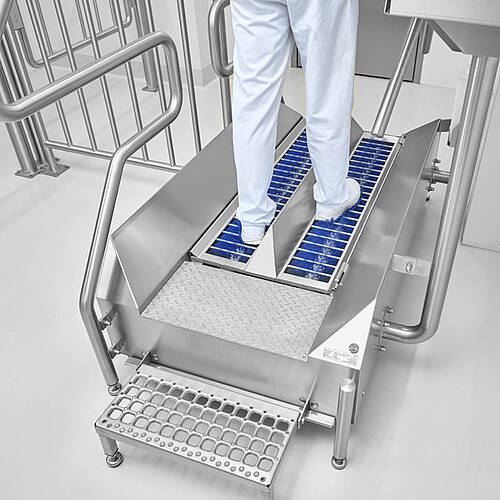
HIGHLINE hygiene sluices: spring bowl technology + inductive sensor
When the stainless steel walking grid is stepped on, the spring cup is lowered and an inductive sensor activates the cleaning cycle:
- Two horizontally positioned, rotating brush rollers clean and disinfect the soles.
- Water and detergent are added as required.
- When stepping off, everything stops immediately: brushes, water, chemicals.
Benefits during operation
- Consumption only on foot contact: Water, detergent and brush run only start when the spring cup is lowered - and stop immediately when leaving the step grate.
- No idling brushes: no pre-running, no post-running, no turning times between two people. The motors only run when soles are being cleaned.
- Consistent cleaning cycle per person: Identical brush run time and medium volume per pass; easy to monitor, document and keep clean.
Comparison with conventional, force-guided systems with overflow sole cleaner
- Brushes/media often "run" in continuous operation >> higher use of water, chemicals and energy.
- Event-controlled start/stop logic of the spring cup technology >> targeted consumption.
- Inductive triggering works independently of clothing colours. Conventional diffuse sensors are less effective at detecting dark-coloured clothing - triggering may fail, making the cleaning process unsafe.
In short: the hygiene process remains constant and resource consumption can be planned.